
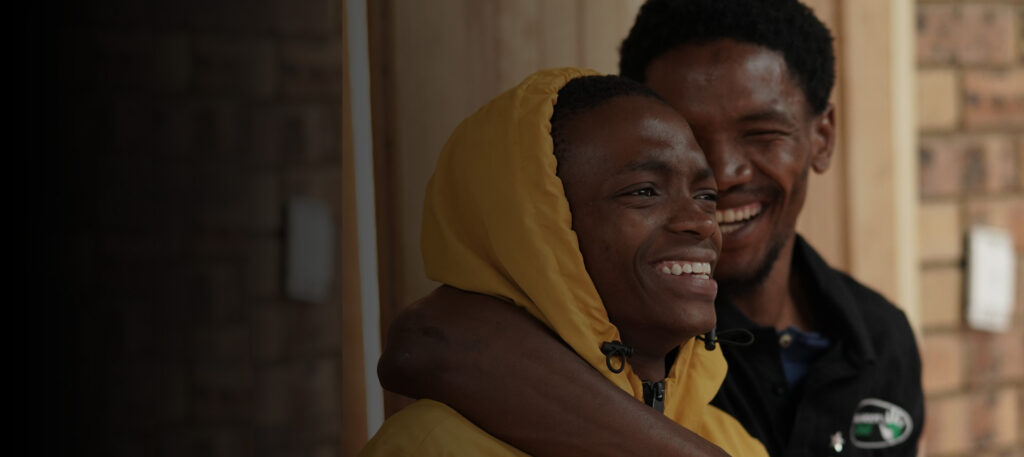
“The only thing that is killing us is not talking,” says Lukhano Mendu, a participant in NACOSA’s My Journey adolescent and young people programme.
We don’t talk to each other. We think we are vibing. We think we are good as gents when we are together, but actually, we are not good because we don’t talk about our feelings.
Lukhano’s words lie at the heart of the challenge of HIV in South Africa. While more women are living with HIV, it is men who are more likely to die from AIDS-related illnesses. Too often, men avoid clinics, don’t get tested for HIV, and are sicker when they do seek help. They are frequently left out of the conversation around HIV prevention. According to the latest UNAIDS figures, knowledge of HIV status is lower among men than women in sub-Saharan Africa but is particularly stark among adolescent boys – only 11% of young men aged 15–19 years have ever taken an HIV test and received results, compared with 22% of young women. And due to global funding cuts, programming is increasingly being reprioritised and focused on those most at-risk of HIV – such as young women – which risks leaving boys and men behind.
Men tend to lack social connection and support from other men and unequal gender roles influence how men interact with their partners, families and children on a range of issues including health-seeking behaviour, condom use and violence. The silence and isolation has a real cost. It increases men’s health risks but also increases the risk of HIV transmission to their partners, as well as contributing to high rates of gender-based violence. The good news? Studies suggest that prevention programming with men and boys could reduce infections in women by half [1].
Men need safe spaces to talk to each other, to share challenges, confront harmful attitudes and to support one another towards healthier choices. NACOSA’s work with boys and men over the years has discovered that peer support and mentoring can provide emotional support, improve uptake and adherence and reduced stigma. Peers and mentors can be effective agents of change, acting as role models and providing accurate, actionable information.
NACOSA is therefore pleased to announce a powerful new partnership with ViiV Healthcare Positive Action. Together, we are launching Thintelo Labafe2 (loosely meaning ‘Prevention for Brothers’). The project will create a brotherhood of support in high-risk communities in Cape Town and Johannesburg. We will train Peer ‘Influencers’ and older volunteer Mentors to reach 1,500 adolescent boys and young men, especially those at higher risk. These Influencers and Mentors will talk openly about health, relationships, and HIV prevention and connect young men to health services, support groups, and essential information. Peer Influencers will use social media and other channels to share HIV and GBV prevention information and, together with the volunteer mentors, they will lead workshops on positive masculinity, respect and building healthy communities.
Too often, men and boys are seen as the problem. “We want young men to understand that they have the potential to be part of the solution,” says NACOSA’s executive director, Mohamed Motala.
This project will encourage men to have discussions in their closed circles, with their friends and families, so that we can really move the needle on ending AIDS in South Africa.”
Let’s hear it for the boys. Let’s start talking.
[1] Monod et al, 2024


